Top FMCSA Compliance Mistakes Owner-Operators Make
Top FMCSA Compliance Mistakes Owner-Operators Make
Most owner-operators do not lose sleep over compliance until something goes wrong.
A failed safety audit. A roadside violation. A warning letter. A problem with operating authority status. Or worse, unexpected DOT audit fines that could have been avoided with better records.
That is the hard truth of trucking compliance: the mistake usually starts small, but the cost grows quietly.
For owner-operators and small trucking business owners, FMCSA audit risk monitor support is not just about avoiding penalties. It is about protecting your authority, your income, your insurance, your equipment, and your ability to keep moving loads without unnecessary interruptions.
Why FMCSA Compliance Mistakes Hurt Owner-Operators More
Large fleets often have compliance departments, safety managers, software systems, and dedicated staff.
Owner-operators usually do not.
You may be the driver, dispatcher, maintenance manager, recordkeeper, business owner, and compliance officer all at once. That makes small mistakes easier to miss.
The problem is that FMCSA compliance does not become easier just because your company is small. Federal Motor Carrier Safety Regulations still apply based on your operation, vehicle, cargo, authority, and business activity.
That is why owner-operators need a simple but consistent system. Not a pile of paperwork. Not guesswork. A real process.
Mistake 1: Treating Compliance as “Only Paperwork”
One of the biggest mistakes owner-operators make is thinking compliance is just about having documents in a folder.
It is not.
Compliance is proof that your business is being managed safely. Your files, logs, inspection reports, maintenance records, and authority details should tell a clear story: your company knows the rules, follows them, and corrects problems when they happen.
This is where an FMCSA audit risk monitor becomes valuable. It helps you see whether your records are actually audit-ready or just sitting somewhere incomplete.
A folder full of half-finished documents will not protect you during an FMCSA safety audit.
Mistake 2: Not Checking Operating Authority Status
Many owner-operators focus on getting their truck ready but forget to regularly check their operating authority status.
That is risky.
Your motor carrier authority is the legal foundation of your trucking business. If there is an issue with your authority, insurance filing, BOC-3, registration update, or business details, it can affect your ability to operate legally.
Some owner-operators also confuse a USDOT number with active motor carrier authority. These are not always the same thing. Depending on your operation, you may need specific authority before hauling certain loads.
Before accepting loads, owner-operators should make sure their authority is active, accurate, and aligned with the work they are doing.
Mistake 3: Ignoring FMCSA CSA Data Until It Looks Bad
FMCSA CSA data is not something you should check only when a broker asks or when an audit notice arrives.
CSA stands for Compliance, Safety, Accountability. It is tied to how FMCSA reviews safety performance and identifies carriers that may need attention.
For owner-operators, FMCSA CSA data can reflect roadside inspections, crash information, violations, and safety trends. Even if you operate one truck, repeated issues can still create a poor safety picture.
The smart move is to monitor your data before it becomes a problem.
If you see repeat issues with tires, lights, brakes, logs, or driver fitness, do not treat them as random events. Treat them as warning signs.
Mistake 4: Waiting Too Long to Fix HOS Problems
Hours-of-service mistakes are one of the most common compliance problems in trucking.
The FMCSA HOS rules are not just about driving time. They also involve records of duty status, rest breaks, ELD use, supporting documents, personal conveyance, yard moves, and unassigned driving time.
A lot of owner-operators make the mistake of saying, “I will clean up the logs later.”
Later is where the problem begins.
If your logs are messy, incomplete, edited without explanation, or missing supporting documents, you may struggle during a DOT audit or FMCSA safety audit.
Good HOS compliance is not about looking perfect. It is about being accurate, consistent, and able to explain your records.
Mistake 5: Thinking One Roadside Violation Does Not Matter
One roadside violation may not destroy your business.
But repeated roadside violations can create a pattern.
That pattern is what matters.
A bad tire, broken light, missing annual inspection proof, or logbook error might seem minor in the moment. But if the same type of issue appears again and again, it can make your company look poorly managed.
This is the counter-intuitive part: FMCSA risk is often built from boring, repeated mistakes — not one dramatic failure.
Owner-operators should review every roadside inspection as business intelligence. It tells you where your operation is weak.
Mistake 6: Not Keeping Maintenance Records Clean
Many owner-operators are good at fixing their trucks.
But they are not always good at proving it.
That is a major FMCSA compliance mistake.
If you repair brakes, tires, lights, suspension, coupling devices, or other safety-related parts, keep proof. Repair invoices, inspection reports, mechanic notes, and maintenance logs can protect you during reviews.
Under DOT Federal Motor Carrier Safety Regulations, vehicle maintenance is not something to handle casually. Your truck needs to be safe, and your records should show that safety issues are being managed.
A repaired truck with poor documentation can still create audit headaches.
Mistake 7: Not Preparing for DOT Audit Fines and Penalties
Many owner-operators do not think about DOT audit fines, DOT safety audit fines, or DOT audit penalties until they receive a notice.
That is too late.
Penalties can vary depending on the violation, situation, and enforcement process. The bigger issue is that audit problems rarely stop at one fine. They can lead to corrective action requirements, authority pressure, insurance concerns, and lost business confidence.
The real goal is not just avoiding a fine. The goal is avoiding the chain reaction that comes after a poor audit result.
This is why regular compliance reviews are worth it. They help you find weak spots while you still have time to fix them.
Mistake 8: Skipping Mock Audits
A mock audit is not only for large fleets.
Owner-operators can benefit from them even more because they often have fewer backup systems.
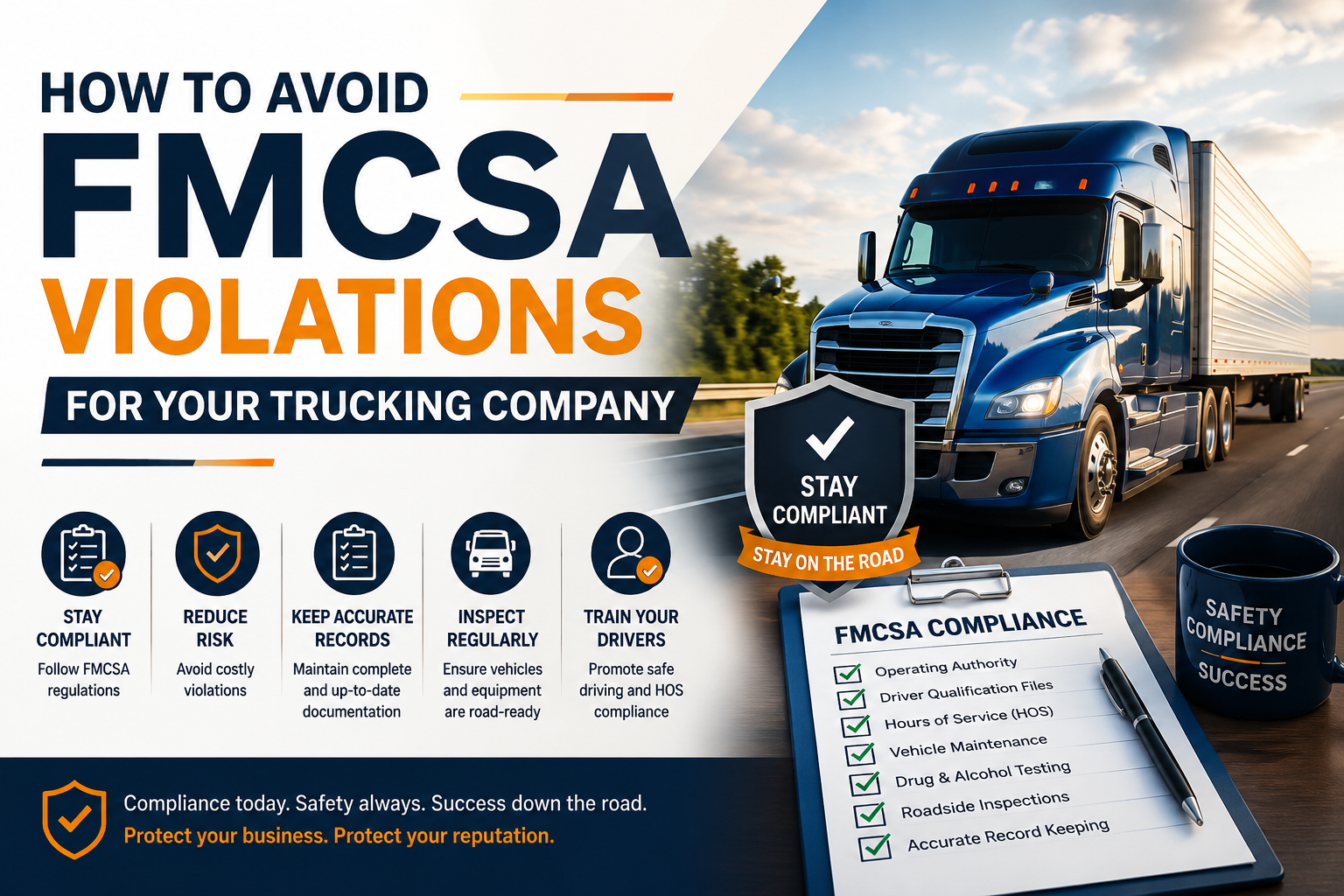
A mock audit reviews your business the way an auditor may review it. It checks driver qualification files, HOS records, maintenance files, authority status, drug and alcohol testing records, inspection reports, and safety controls.
The purpose is simple: find the problems before FMCSA does.
A mock audit can show you whether your records are truly ready or whether you are relying on memory and luck.
Mistake 9: Forgetting Drug and Alcohol Testing Requirements
Drug and alcohol compliance is one area where owner-operators cannot afford confusion.
If your operation requires a testing program, you need to understand pre-employment testing, random testing, Clearinghouse queries, return-to-duty requirements, and supervisor-related responsibilities where applicable.
Some owner-operators assume that because they are small, these rules may not fully apply.
That assumption can become expensive.
FMCSA compliance depends on your actual operation, not the size of your company. If you are subject to the rules, you need the right program and proper records.
Mistake 10: Not Having a Simple Monthly Compliance Routine
Compliance becomes overwhelming when it is ignored for months.
A simple monthly routine can prevent most common issues.
Once a month, review your authority status, inspection history, HOS records, maintenance files, insurance details, driver documents, and open corrections. This does not need to be complicated, but it does need to be consistent.
Think of it like preventive maintenance for your business.
You would not run your truck forever without checking it. Do not run your company without checking its compliance health.
The Better Way: Use a Risk-Based Compliance System
The best owner-operators do not try to manage everything at once.
They manage risk in layers.
Start with the areas that can stop your business fastest: authority status, insurance, HOS records, inspections, maintenance, and drug and alcohol compliance. Then build stronger documentation around each area.
This is where an FMCSA audit risk monitor can help. It gives you a clearer view of where your trucking business may be exposed before those issues turn into fines, penalties, or failed audits.
A good compliance system should answer three questions:
Is my authority safe?
Are my records audit-ready?
Are my safety issues being corrected before they repeat?
If you can answer those questions confidently, you are already ahead of many owner-operators.
Final Thoughts
FMCSA compliance mistakes are usually not caused by laziness.
They are caused by overload.
Owner-operators have too much to manage and not enough time to organize every detail. But ignoring compliance does not make the risk disappear. It only makes the problem harder to fix later.
If you want to protect your trucking business, start with the basics: check your operating authority status, monitor FMCSA CSA data, follow FMCSA HOS rules, keep maintenance records clean, and prepare for audits before they happen.
The owner-operators who stay ahead are not the ones who wait for a warning letter. They are the ones who monitor risk early and fix small issues before they become expensive.
Need help reviewing your FMCSA compliance, motor carrier authority, safety audit risk, or DOT audit readiness? Get a professional FMCSA audit risk monitor review and protect your trucking business before small mistakes turn into costly penalties.













 +559-389-7772


