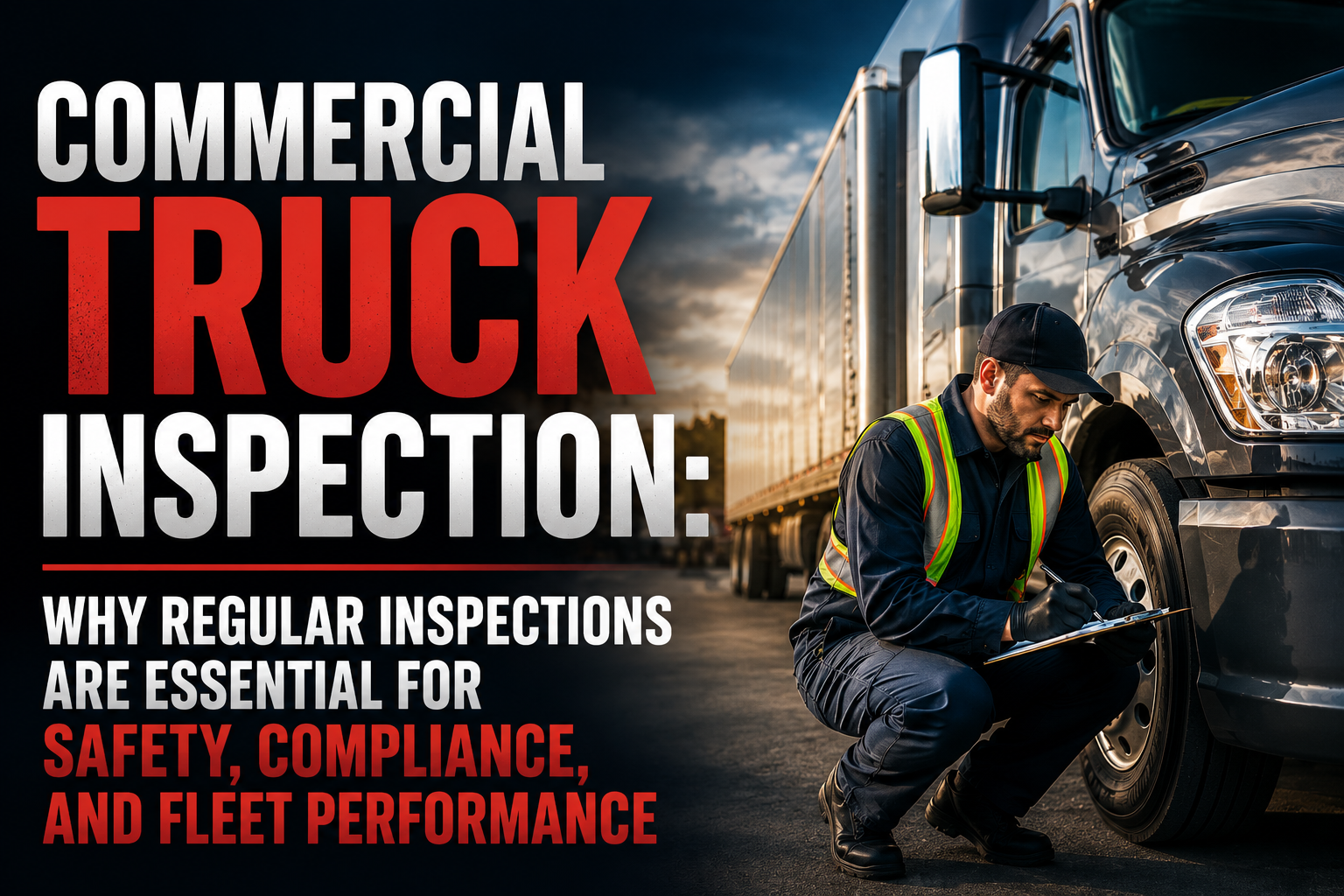
Commercial Truck Inspection: Why Regular Inspections Are Essential for Safety, Compliance, and Fleet Performance
Quick Answer
A commercial truck inspection is a comprehensive evaluation of a commercial vehicle to ensure it meets federal and state safety regulations while remaining safe to operate on public roads. Regular truck inspection services help identify mechanical issues before they become expensive repairs, reduce downtime, improve driver safety, and support DOT compliance.
Whether you operate a single truck or manage an entire fleet, routine inspections are one of the most effective ways to protect your business, drivers, and customers.
What Is a Commercial Truck Inspection?
A commercial truck inspection is a detailed assessment of a truck’s critical systems, including brakes, tires, steering, suspension, lighting, engine components, coupling devices, and safety equipment.
The purpose isn’t simply to pass an inspection.
It’s to ensure the vehicle is safe, reliable, and compliant before problems lead to roadside violations or accidents.
Professional truck inspection services help carriers detect hidden issues that may not be visible during everyday operation.
Why Are Commercial Truck Inspections So Important?
Every mile a commercial truck travels places stress on its components.
Brakes wear down.
Tires lose tread.
Suspension parts loosen.
Lights fail.
Small mechanical issues can quickly become serious safety risks if left unnoticed.
Regular inspections help identify these problems early, reducing repair costs while improving vehicle reliability.
For trucking companies, inspections also help minimize unexpected downtime and maintain compliance with DOT regulations.
What Does a Commercial Truck Inspection Include?
A thorough inspection covers every major safety component of the vehicle.
Typical inspection areas include:
- Brake system
- Tires and wheels
- Steering components
- Suspension
- Engine compartment
- Battery and electrical system
- Headlights and signal lights
- Windshield and mirrors
- Coupling devices
- Fifth wheel assembly
- Air lines
- Fuel system
- Exhaust system
- Emergency equipment
- Horn
- Wipers
- Reflective markings
- Trailer connections
Every component plays an important role in keeping drivers and other road users safe.
Common Problems Found During Truck Inspections
Many inspection failures result from issues that develop gradually over time.
Common findings include:
- Uneven tire wear
- Low brake pad thickness
- Air leaks
- Broken lights
- Loose suspension components
- Oil leaks
- Damaged hoses
- Steering play
- Worn belts
- Battery corrosion
Most of these issues are relatively inexpensive to fix when discovered early.
Ignoring them often leads to larger repair bills and unplanned downtime.
Why Professional Truck Inspection Services Matter
Some fleet owners perform basic visual inspections themselves.
While daily driver inspections are important, professional truck inspection services provide a much deeper evaluation.
Experienced inspectors understand current DOT regulations and know where hidden problems typically occur.
Professional inspections also provide documented reports that help fleet managers schedule maintenance before issues become critical.
Instead of reacting to breakdowns, businesses can plan repairs more efficiently.
How Commercial Truck Inspections Reduce Operating Costs
Many businesses view inspections as another expense.
In reality, they’re often a cost-saving investment.
Regular inspections help reduce:
- Emergency roadside repairs
- Expensive component failures
- Vehicle downtime
- Out-of-service violations
- Accident-related costs
- Insurance risks
Preventive maintenance almost always costs less than emergency repairs.
How Often Should Commercial Trucks Be Inspected?
Inspection frequency depends on:
- Vehicle usage
- Mileage
- Load type
- Operating conditions
- DOT requirements
- Company maintenance schedules
In addition to required annual inspections, drivers should perform pre-trip and post-trip inspections before and after every journey.
High-mileage fleets often benefit from more frequent professional inspections.
What Happens If Inspection Issues Are Ignored?
Delaying repairs can lead to:
- DOT violations
- Failed roadside inspections
- Out-of-service orders
- Increased maintenance costs
- Delivery delays
- Reduced customer confidence
- Safety hazards
A small maintenance issue today can become a major operational problem tomorrow.
Choosing the Right Truck Inspection Services
Not every inspection provider offers the same level of expertise.
When selecting truck inspection services, consider:
- Experience with commercial vehicles
- Knowledge of FMCSA and DOT regulations
- Detailed inspection reports
- Fast turnaround times
- Transparent recommendations
- Fleet inspection capabilities
The right inspection partner helps improve compliance while reducing long-term maintenance costs.
Questions Every Fleet Owner Should Ask
Before putting a truck on the road, ask:
- Are the brakes operating correctly?
- Are all lights functioning?
- Is tire tread within legal limits?
- Are there any fluid leaks?
- Is the steering system responsive?
- Have safety devices been tested?
- Is the trailer connection secure?
Asking these questions consistently helps prevent unexpected issues.
Commercial Truck Inspection Is About More Than Compliance
Many businesses focus on inspections only because regulations require them.
Successful fleets see inspections differently.
They use inspections to:
- Improve driver safety
- Reduce operating costs
- Increase fleet reliability
- Protect business reputation
- Improve vehicle lifespan
- Prevent expensive breakdowns
Inspection isn’t just about compliance.
It’s part of running an efficient transportation business.
Final Thoughts
Every commercial truck experiences wear and tear.
The difference between a reliable fleet and an unreliable one often comes down to inspection and preventive maintenance.
Regular commercial truck inspection programs help businesses identify safety concerns before they become serious problems.
Professional truck inspection services provide peace of mind by ensuring vehicles remain compliant, roadworthy, and ready for every journey.
Whether you operate one truck or manage an entire fleet, investing in routine inspections is one of the smartest decisions you can make for your drivers, customers, and business.
Frequently Asked Questions
What is a commercial truck inspection?
A commercial truck inspection is a detailed examination of a truck’s mechanical, electrical, and safety systems to ensure it complies with DOT regulations and is safe for operation.
How often should commercial trucks be inspected?
Commercial trucks require annual inspections under federal regulations, along with daily pre-trip and post-trip inspections. Fleet operators may also schedule additional inspections based on mileage and vehicle usage.
What do truck inspection services include?
Professional truck inspection services typically include inspections of brakes, tires, steering, suspension, lighting, engine components, trailer connections, safety equipment, and other critical systems.
Why are truck inspections important?
Truck inspections help prevent accidents, reduce maintenance costs, improve compliance, avoid roadside violations, and keep vehicles operating safely.
Can a truck fail an inspection?
Yes. Common reasons include worn brakes, damaged tires, defective lights, steering issues, air leaks, suspension problems, and other safety-related defects.
Are pre-trip inspections mandatory?
Yes. CDL drivers are expected to perform pre-trip inspections before operating commercial vehicles to identify safety concerns before beginning a trip.
How do truck inspection services help fleet owners?
Professional inspections help fleet owners reduce unexpected breakdowns, improve maintenance planning, increase vehicle uptime, maintain DOT compliance, and extend the lifespan of commercial vehicles.