FMCSA Registration Modernization in 2026: What the New Registration System Means for Motor Carriers
Introduction
The Federal Motor Carrier Safety Administration is moving toward a more modern approach to how motor carriers, brokers, freight forwarders, and other regulated businesses interact with federal registration systems.
For trucking companies, this matters because registration is not simply a one-time task performed when a company opens. Carrier information may need to remain accurate throughout the life of the business, and changes involving ownership, addresses, operating authority, contact information, or business operations can create additional responsibilities.
The broader FMCSA modernization effort represents an important shift toward more centralized digital processes, stronger identity controls, improved data quality, and more efficient management of registration information.
For owner-operators and fleets, understanding the FMCSA new registration system is therefore becoming increasingly important.
This guide looks specifically at the modernization of FMCSA registration—not another step-by-step USDOT or MC Authority registration guide—and explains what trucking companies should do to prepare.
Quick Answer: What Is the FMCSA New Registration System?
The FMCSA new registration system refers broadly to FMCSA’s efforts to modernize how regulated entities access, submit, update, and manage registration information.
Rather than thinking of registration as a collection of disconnected forms and systems, modernization aims to create a more streamlined digital environment for managing carrier information.
For motor carriers, the practical impact may include greater emphasis on:
- Accurate business information
- Secure account access
- Identity verification
- Centralized registration processes
- Digital carrier records
- Timely registration updates
- Better data consistency
- Fraud prevention
- Ongoing compliance management
The key takeaway is simple: carriers should expect accurate digital records and secure account management to become increasingly important.
Why Is FMCSA Modernizing Its Registration Processes?
The trucking industry has changed significantly since many federal registration processes were originally developed.
Today, thousands of carriers interact digitally with government systems while businesses frequently change addresses, ownership structures, contact information, vehicles, and operational models.
Older or fragmented processes can make maintaining accurate information more complicated.
Modernization can help address several important issues.
1. Better Data Accuracy
Federal safety and registration systems depend on accurate carrier information.
Incorrect or outdated records can affect communication, registration processes, safety oversight, and other administrative functions.
A modernized system can make it easier to maintain consistent information.
2. Improved Security
Motor carrier identities and registration information have value.
Unauthorized changes, fraudulent registrations, and compromised accounts can create serious problems for legitimate trucking businesses.
Modern systems increasingly emphasize secure authentication and verification.
3. Easier Account Management
Carriers often interact with multiple registration and compliance processes.
Greater centralization can potentially reduce confusion and make it easier to understand what information is associated with a business.
4. Reduced Duplicate Information
When information exists across multiple systems, discrepancies can develop.
Modernization creates opportunities to improve data consistency and reduce unnecessary duplication.
FMCSA Registration Update: Why Existing Carriers Should Pay Attention
A common misconception is that changes to FMCSA registration only matter to companies applying for a USDOT number for the first time.
Existing carriers should pay attention as well.
An FMCSA registration update may become necessary when important company information changes.
Examples include changes to:
- Legal business name
- DBA information
- Principal business address
- Mailing address
- Phone number
- Email
- Company officers
- Ownership information
- Type of operation
- Cargo classifications
- Number of vehicles
- Number of drivers
Some changes may involve additional filings or regulatory procedures depending on the carrier’s circumstances.
Keeping carrier information accurate should therefore be treated as an ongoing compliance responsibility.
Modernization Changes the Way Carriers Should Think About Registration
Historically, some businesses have treated federal registration as a checklist:
Get USDOT number → obtain authority → start operating.
That approach is too simplistic.
A modern carrier should think of registration as a living business record.
Your federal registration information should accurately represent the company that is actually operating.
For example, imagine a trucking company originally registered with:
- Two trucks
- Two drivers
- One business address
- General freight operations
Several years later, it operates:
- Fifteen trucks
- Twenty drivers
- A different address
- Additional cargo categories
If important carrier information has not been properly updated, its federal records may no longer accurately represent its operation.
That is why registration maintenance deserves ongoing attention.
FMCSA Compliance System: Registration Is Only One Piece
An effective FMCSA compliance system extends beyond registration.
Registration establishes and identifies the carrier, while ongoing compliance involves maintaining appropriate safety and operational processes.
Depending on the operation, this can involve areas such as:
Driver Qualification
Motor carriers may need to maintain required driver qualification records and ensure drivers remain properly qualified.
Hours of Service
Applicable carriers and drivers must comply with federal hours-of-service requirements.
Drug and Alcohol Testing
CDL operations subject to DOT testing requirements must maintain appropriate drug and alcohol testing programs.
Vehicle Maintenance
Commercial vehicles must be appropriately inspected, repaired, and maintained.
Accident Records
Applicable accident records must be maintained according to regulatory requirements.
Insurance
Carriers subject to federal insurance requirements must maintain appropriate coverage and filings.
Registration Maintenance
USDOT and authority-related information must remain accurate and current when updates are required.
Modernization makes it increasingly important to view these responsibilities as interconnected components of carrier compliance.
From Paperwork to Digital Compliance Management
One of the biggest changes occurring across transportation regulation is the transition from paperwork-heavy administration toward digital record management.
For carriers, this means a filing cabinet alone is no longer an ideal compliance strategy.
Trucking businesses should consider maintaining structured digital records for:
- FMCSA registrations
- Authority documentation
- Insurance records
- Driver files
- Vehicle records
- Maintenance documentation
- Drug-testing records
- Permit information
- Renewal dates
- Compliance correspondence
Documents should also be backed up securely.
A well-organized digital compliance system can make routine administration much easier.
Identity Verification Is Becoming More Important
Registration modernization isn’t only about convenience.
Security is becoming increasingly important.
Fraud involving motor carriers, brokers, identity theft, and unauthorized account activity has become a significant concern within transportation.
Carriers should therefore protect:
- FMCSA account credentials
- Login email accounts
- Company identification information
- USDOT information
- Authority documentation
- Tax information
- Banking details
Only authorized individuals should be permitted to make important regulatory changes on behalf of the company.
Why Accurate Email Information Matters
Email addresses are often overlooked when businesses think about compliance.
However, digital government systems increasingly rely on electronic communication.
An outdated email address can mean that important messages are sent to an account nobody monitors.
Carriers should use an email address that:
- The business controls
- Is actively monitored
- Has strong authentication
- Will remain available if an employee leaves
Avoid allowing critical regulatory accounts to depend entirely on one employee’s personal email address.
FMCSA Modernization and Fraud Prevention
One potentially important benefit of FMCSA modernization is stronger protection against fraudulent activity.
Motor carriers should still take their own precautions.
Regularly review your company information and investigate unexpected changes.
Warning signs may include:
- Unrecognized account activity
- Unexpected changes to company details
- Emails about changes you didn’t request
- Unknown individuals claiming to represent your business
- Unexpected insurance or authority-related activity
If something appears incorrect, investigate it promptly through appropriate official channels.
What Should New Trucking Companies Do?
New trucking companies should build their registration and compliance infrastructure correctly from the beginning.
Before submitting federal registrations, make sure you have consistent information for your:
- Legal business name
- EIN
- Business structure
- Physical address
- Mailing address
- Phone number
- Email address
- Company officers
- Type of operation
- Cargo
- Vehicles
Inconsistent information can create unnecessary complications later.
What Should Existing Motor Carriers Do?
Existing carriers should conduct a periodic FMCSA registration review.
Compare your current operations with your federal records.
Ask:
Is our legal name correct?
Is our address current?
Are our phone and email details accurate?
Does our operational information still reflect what we do?
Are authorized company representatives current?
Are our registrations and filings up to date?
If the answer to any of these questions is no, determine which update procedure applies.
Don’t Confuse Registration Modernization With Automatic Compliance
This distinction is important.
A better registration system does not automatically make a trucking company compliant.
Technology can improve:
- Data submission
- Account security
- Record accuracy
- Communication
- Administrative efficiency
But the carrier remains responsible for operating in accordance with applicable regulations.
A company can have perfectly accurate FMCSA registration information and still have compliance problems involving drivers, vehicles, hours of service, maintenance, or drug-testing requirements.
FMCSA Registration vs. FMCSA Compliance
Think about the difference this way:
| FMCSA Registration |
FMCSA Compliance |
| Identifies the carrier |
Governs ongoing operations |
| USDOT information |
Driver qualification |
| Operating authority |
Hours of service |
| Company information |
Vehicle maintenance |
| Registration updates |
Drug & alcohol requirements |
| Business details |
Safety management |
| Authority information |
Recordkeeping |
Both sides matter.
A strong trucking operation needs accurate registration and effective compliance management.
Common Mistakes Carriers Should Avoid
Ignoring Registration Information After Startup
Getting your USDOT number isn’t the end of registration management.
Review information periodically.
Sharing Account Credentials
Do not casually share critical regulatory account credentials with drivers, employees, contractors, or unknown third parties.
Using Outdated Contact Information
Make sure FMCSA can reach the appropriate business representative.
Creating Duplicate Registrations
Don’t automatically submit another registration simply because you cannot access an existing account. Determine the correct procedure first.
Assuming Every Update Is the Same
Different business changes may require different procedures.
Waiting Until Something Goes Wrong
Periodic reviews are much easier than correcting years of outdated information after a problem occurs.
Creating an FMCSA Compliance Calendar
Modernization is a good reason to improve internal compliance management.
Create a calendar that tracks relevant deadlines and review dates for your operation.
Depending on your business, this might include:
- Registration reviews
- Required USDOT updates
- UCR renewal
- IRP renewal
- IFTA reporting
- Vehicle inspections
- Insurance renewals
- Driver-document expirations
- Drug-testing program requirements
- Permit renewals
Assign responsibility for each item rather than assuming someone will remember it.
How FMCSA Modernization Can Benefit Growing Fleets
Registration administration becomes more complicated as a fleet grows.
A one-truck owner-operator may manage records personally.
A 30-truck operation may have multiple drivers, dispatchers, vehicles, permits, registrations, insurance documents, and compliance responsibilities.
Centralized digital systems can potentially help growing fleets maintain greater consistency and visibility.
But technology works best when the underlying business processes are organized.
How JST Truck Permits Can Help
Navigating changing FMCSA registration and compliance processes can be challenging, particularly for new carriers and rapidly growing fleets.
JST Truck Permits assists owner-operators and trucking companies with transportation registration, permits, and compliance-related services.
Support may include:
- FMCSA registration assistance
- USDOT registration and updates
- MC Authority services
- Carrier information updates
- New trucking company setup
- IRP registration
- IFTA registration
- UCR
- Truck registration
- Title transfers
- Temporary permits
- DOT compliance support
- Fleet permit management
As FMCSA systems evolve, carriers should make sure they are following current official procedures rather than relying on outdated instructions.
Frequently Asked Questions
What is the FMCSA new registration system?
The term generally refers to FMCSA’s modernization of registration processes and technology used by regulated transportation businesses. Carriers should consult current FMCSA guidance for the exact systems and procedures applicable to them.
Is the FMCSA registration system changing in 2026?
FMCSA registration modernization is an evolving initiative. Implementation schedules and system functionality can change, so carriers should verify current requirements directly with FMCSA before taking action.
Will existing USDOT numbers disappear?
Carriers should not assume they need a new USDOT number simply because registration technology changes. Follow FMCSA instructions regarding existing registrations and account migration.
What is an FMCSA registration update?
It refers to updating applicable carrier information when required so federal records accurately reflect the business and its operations.
Is FMCSA modernization the same as MOTUS?
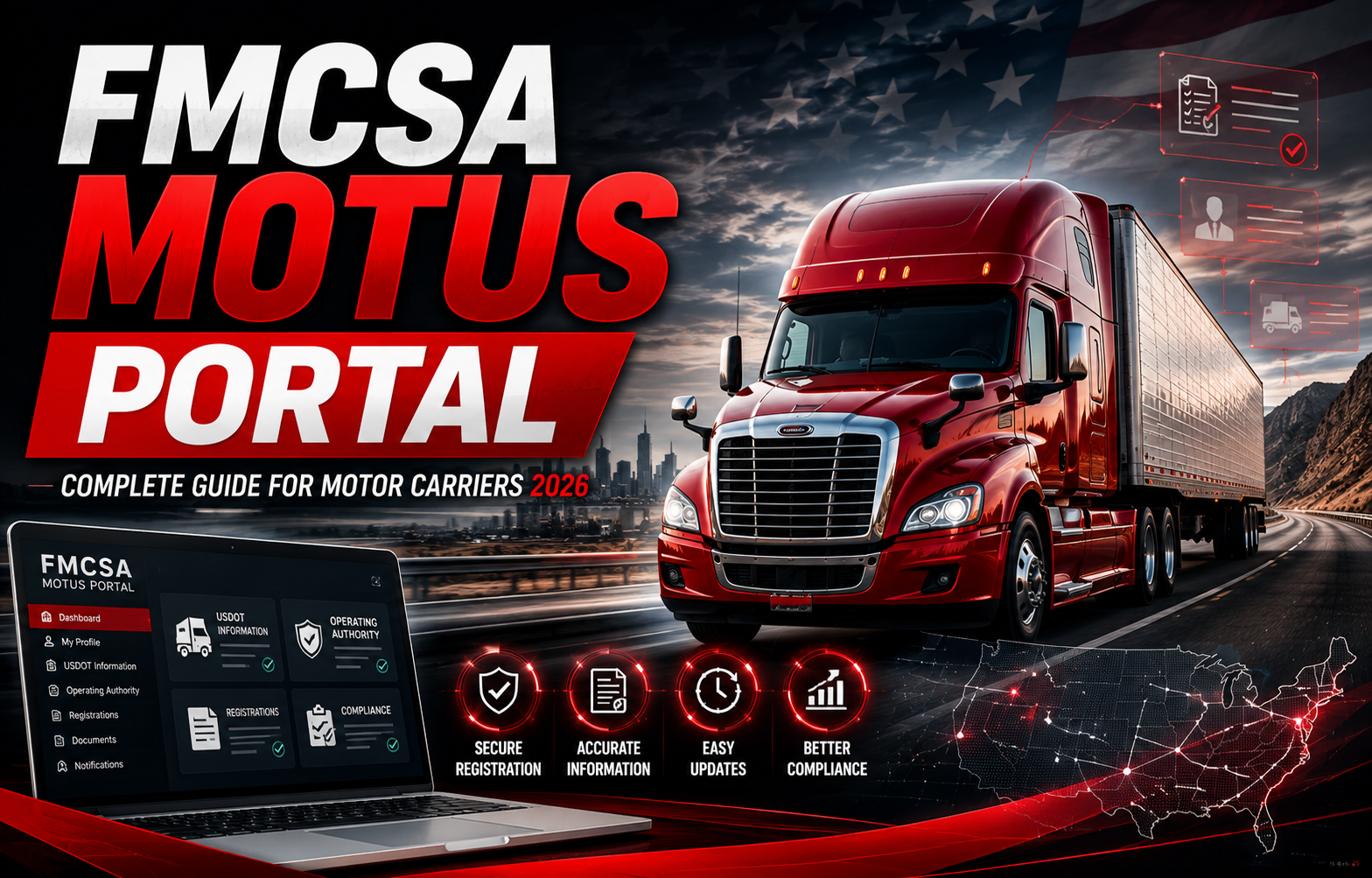
Not exactly. MOTUS and registration modernization are related topics, but FMCSA modernization is the broader subject involving the evolution of registration technology, security, identity verification, data management, and carrier administration.
Does a new registration system change FMCSA safety regulations?
A technology or registration-system change does not automatically replace the underlying Federal Motor Carrier Safety Regulations. Carriers remain responsible for determining and complying with the rules applicable to their operations.
Final Thoughts
The FMCSA new registration system represents more than a website redesign. Registration modernization reflects a broader movement toward more secure digital identities, better carrier data, centralized administration, and improved regulatory processes.
For trucking businesses, the most important preparation is not learning where every new button is located.
It is making sure your business information is accurate, secure, organized, and regularly reviewed.
New carriers should establish clean records from day one. Existing fleets should review their FMCSA information and internal compliance systems periodically. Growing businesses should establish clear responsibility for registrations, renewals, permits, and compliance documentation.
As FMCSA modernization continues, trucking companies with organized records and strong compliance processes will be better positioned to adapt.